
A Multi-Stakeholder Partnership for Better Obesity Trials
The DIA Obesity Consortium is a multi-stakeholder public–private partnership dedicated to improving the efficiency and impact of obesity clinical trials. Building on a shared commitment to advancing clinically meaningful outcomes, the consortium works to standardize endpoints, optimize trial design, and explore innovative approaches that may address multiple indications within a single development program.
Through structured dialogue and collaboration among regulators, industry leaders, academic and nonprofit experts, payers, and patients, the consortium defines and maps the optimal path forward for the field—accelerating scientific progress while maintaining rigor and relevance.
Addressing Critical Gaps in Obesity Clinical Development
This work benefits the life sciences community by building consensus around standardized, fit-for-purpose clinical measures and endpoints that will reduce development inefficiencies, strengthen regulatory review, and accelerate patient access to safe, effective obesity therapies worldwide.
Addressing fragmentation and variability in obesity clinical trial design, endpoints, and outcome measures that limit comparability and regulatory confidence.
Supporting more efficient, scientifically rigorous, and patient-relevant trials that better inform regulatory and clinical decision-making.
Advancing collaboration among regulators, industry, academic researchers, nonprofits, and patients to align on what constitutes clinically meaningful benefit in obesity.
Working Groups
Two focused working groups deliver coordinated outputs to improve Phase 3 obesity trial design and endpoint standardization.
Focused on building consensus around what, how, and when to measure label-enabling efficacy endpoints in Phase 3 obesity trials, with particular attention to body composition and physical function as indicators of meaningful weight loss.
Centered on identifying efficient clinical trial designs to support multiple obesity-related indications, including prioritization of key comorbidities, use of multi-endpoint or single-trial approaches, and evaluation of surrogate endpoints to reduce reliance on standalone outcome studies.
Key Activities & Status
From stakeholder formation to consensus publication — a structured pathway from expert insight to measurable global impact.
Initial stakeholder engagement to assess alignment, define priorities, and establish the strategic framework for the DIA Obesity Consortium.
Convened an Executive Roundtable on April 24, 2025 in Gaithersburg, MD with FDA participation, followed by a presentation of key themes at the DIA 2025 Global Annual Meeting on June 18, 2025 in Washington, DC. Insights are being summarized in a draft manuscript for publication in Global Forum.
Advancing global consensus on standardized clinical measures and developing a Core Clinical Endpoint Set for Phase 3 obesity trials, including a March 23, 2026 meeting in Rotterdam with EMA participation.
Presenting Stage 1 outcomes at the DIA 2026 Global Annual Meeting on June 16, 2026 in Philadelphia, PA, and expanding the consortium's scope and membership to address additional priority topics requiring multi-stakeholder consensus.
Co-Chairs & Advisory Committee
The consortiums draws on expertise and guidance from across industry, regulatory agencies, academia, medical experts, and patient advocacy organizations.
Charlie Harris
Katherin Ruiz
Fady Tanios
Alison Matsui
Odd-Erik Johansen

Dr. Jingyu (Julia) Luan is an Executive Regulatory Science Director in AstraZeneca, overseeing the global regulatory strategy and supporting the research, development and commercialization of CVRM products. She is a core member of the CVRM Regulatory Leadership Team. Prior to AZ, she worked at FDA for 13 years and held positions with increasing responsibilities, including Statistical Reviewer, Team Leader, and Acting Deputy Division Director. Dr. Luan is President of Chinese Biopharmaceutical Association 2023–2024.


Brad Jordan is the Associate Vice President of Regulatory Policy and Strategy at Eli Lilly, where he is responsible for the regulatory policy strategy for Lilly's cardiometabolic and immunology therapeutic areas.



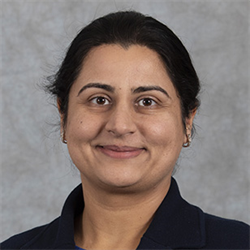
Joe Nadglowski is President & CEO of the Obesity Action Coalition (OAC) – a nonprofit organization formed in 2005 dedicated to elevating and empowering individuals affected by obesity through education, advocacy and support. A frequent speaker and author, Mr. Nadglowski is especially passionate about access to obesity treatments, tackling weight bias and sharing his own experiences with obesity.
He has more than 25 years of experience working in patient advocacy, public policy and education and is a graduate of the University of Florida.
Jeffrey Siegel is the Director of the Office of Drug Evaluation Sciences (ODES) in the Office of New Drugs (OND), CDER, FDA. ODES oversees Clinical Outcome Assessments, Biomarker Qualification, Research and Bioinformatics in OND. Dr. Siegel has over 20 years of experience in research, regulatory, and clinical drug development.
Jeff received his B.A. from Columbia University and M.D. from Yale University. Following his training in internal medicine and basic science research, he served at FDA from 1996–2010 as a medical officer and then Medical Team Leader. In 2010, he left FDA for industry and worked at Genentech/Roche and subsequently at Gilead Sciences before rejoining FDA in February 2021.
Charu Gandotra, MD, MS, FACC, FASE currently serves as Lead Physician in the Division of Cardiology and Nephrology, Center for Drug Evaluation and Research at the U.S. Food and Drug Administration (FDA). In addition, Dr. Gandotra serves as Clinical Faculty and Associate Professor in the Division of Cardiology, Department of Internal Medicine, College of Medicine, Howard University.
She completed her MD from Dayanand Medical College & Hospital, India, internal medicine residency and general cardiology fellowship at Howard University Hospital, Washington DC. She completed a Masters in Clinical and Translational Research at Georgetown-Howard Universities Center for Clinical and Translational Science. She joined FDA in 2018.

Dr. Vassileva has decades of experience with managing complex multi-stakeholder biomedical research programs. She spent most of her career in the nonprofit sector, leading the Science Team at the Arthritis Foundation, and working at the Foundation for NIH and the American Association for the Advancement of Science. She was also on the leadership teams of two health research organizations, serving as project director on multiple government contracts.
Her areas of expertise include musculoskeletal, metabolic, immunity and inflammation disorders, as well as patient engagement. She received her PhD in Biochemistry and Cell Biology from Johns Hopkins.

Sorcha McCrohan is a Senior Scientific Project Manager for Global Science at DIA. In her current role, she focuses on content development and strategy for DIA's meetings to improve and facilitate innovation in clinical research, drug development, and the fields of devices and diagnostics.
Before joining DIA, she conducted COVID-19 research in Chiapas, Mexico, and worked in marketing within Pfizer's Global Vaccines franchise. Sorcha holds a BA in Sociology from Mount Holyoke College and an MSc in Global Health, Disease Prevention & Control from Georgetown University.
Key Deliverables
The consortium will generate practical, consensus-driven resources to inform obesity clinical development, regulatory engagement, and evidence-generation strategies worldwide.
A consensus-based Core Clinical Endpoint Set to support standardized Phase 3 obesity trials across global regulatory regions.
Recommendations on standardized approaches to measuring body composition and physical function as indicators of meaningful weight loss.
Frameworks for more efficient clinical trial designs addressing obesity and priority comorbidities through multi-endpoint and single-trial approaches.
Public-facing outputs including white papers, presentations, and peer-reviewed publications to support broad dissemination and global adoption.
Benefits of Membership
Participation is open to pharmaceutical and biotechnology companies, regulatory agencies, academic researchers, nonprofit organizations, patient advocacy groups, and other stakeholders engaged in obesity research and clinical development.